

Early Breast Cancer
You are not alone in this. This page will help you understand every step - from the first suspicion to follow-up care. Read at a pace that suits you.
Who should I contact?
If you have noticed a change in your breast, first contact your or at the . They will for imaging – or .

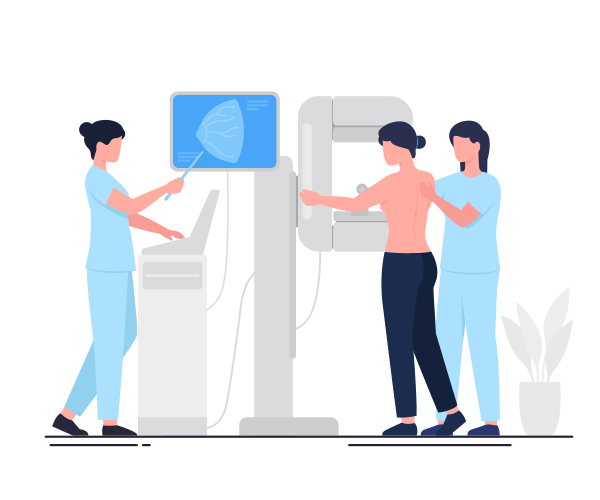
Mammography and Ultrasound
Imaging provides a clear picture of breast tissue. uses X-rays; is radiation-free. Sometimes is needed for additional precision.
Confirming the Diagnosis
If imaging shows a suspicious change, a is performed at a /. The reveals the and (, , , ).

Preparing for the Tumor Board
To be presented at the , you need to have a from the , as well as basic laboratory and radiological examinations ( of the abdomen, of the lungs and skeleton; and depending on the doctor's assessment, a of the chest, abdomen, and pelvis). All these examinations can be done at health centers and hospitals ( and ).

The Team Decides Together
, , and review the findings and propose a treatment plan. This usually includes one or more approaches. A , , or other specialist may also be involved if needed.

What Does Treatment Look Like?
Treatment may include , , , and/or . Not everyone receives all treatments – therapies are combined according to the findings. and/or are administered at or healthcare facilities.

Beginning of Follow-up
When initial treatment ( and/or and/or ) is completed and there are no signs of active disease, you enter the follow-up period. If your tumor was hormone-dependent, during the you will receive . This therapy is taken in tablet form for 5 to 10 years, as recommended by the . The goal is to regularly check how you are feeling and to respond promptly if new symptoms appear.

Tablets to Prevent Recurrence (if needed)
If the tumor is , is given in tablet form – usually for 5 to 10 years, as recommended by the .

Schedule of Check-ups and Mammography
check-ups are more frequent in the first two years, then less often. For women without symptoms, usually only an annual is recommended from .